

Beyond the 5 Senses: the 4 Hidden Systems that Shape How You Feel, Think, and React
Understanding them can help you better handle stress, anxiety, and pressure

Prefer to listen? Here’s the audio version by Jon:
Ever wondered why you react the way you do under pressure?
I used to hate speaking in pubic, the rapid heartbeat, sweaty palms, hot cheeks and my mind going blank. I thought it would always be that way until I understood how my nervous system works. Applying this knowledge changed my relationship with stress for the better.
And you can learn it too.
Here, I’ll show you how to work with your nervous system to stay calmer, more focused, and in control.
The four ceptions
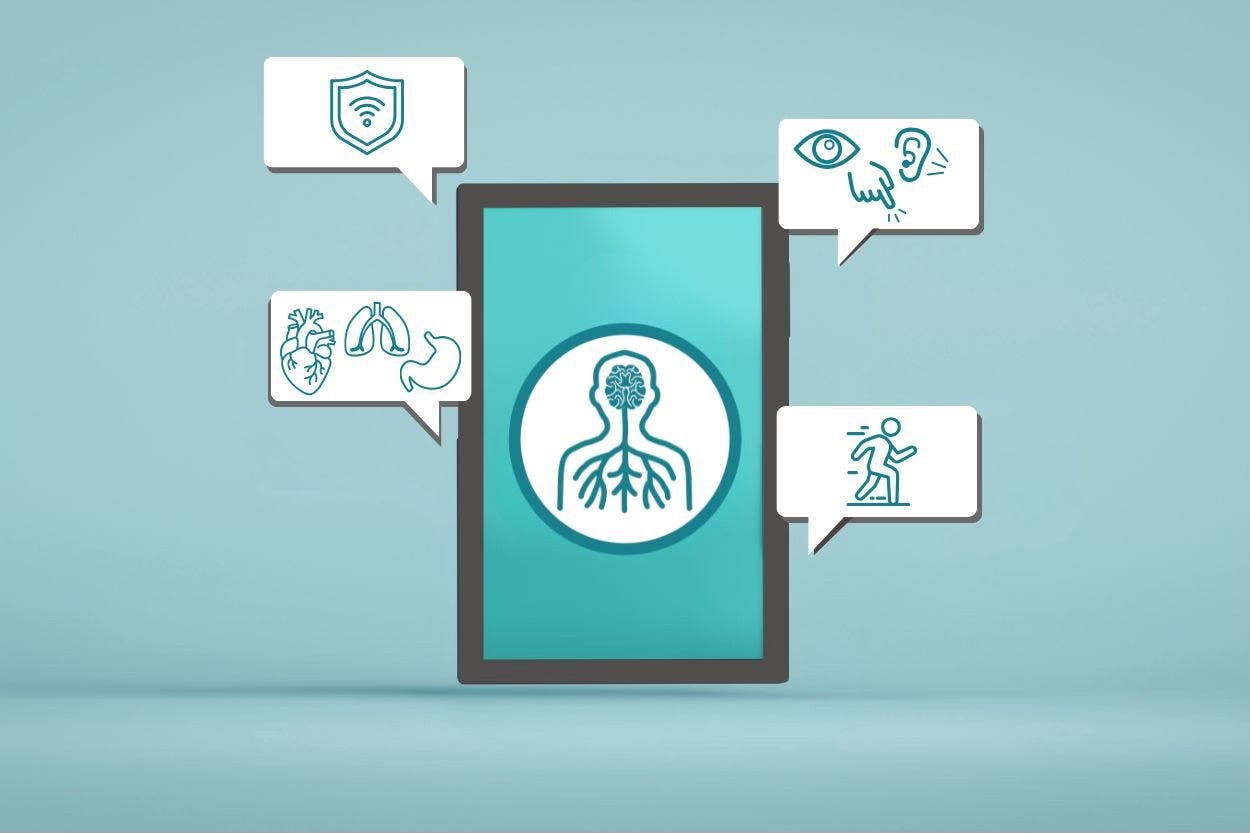
You’ve heard of the five senses. But beneath the surface are four hidden body–mind systems. They steer your thoughts, emotions, and behaviours.
For simplicity, I call these four systems ‘ceptions’; short for perception-based systems.
They are:
Neuroception: your subconscious safety scanner.
Interoception: your internal emotion tracker.
Proprioception: your body’s position in space.
Exteroception: your sensory anchor to the present.
Together as key parts of your nervous system, they shape how you experience life, especially under pressure.
These systems are always on, but you’ll notice them most in situations like:
Tough conversations.
Walking through a busy crowd.
Managing anxiety or uncertainty.
Making decisions, pitching ideas, or navigating pressure.
The more aware you are of these four ceptions, the more control you have over your reactions. Wherever you are, whoever you’re with.
To see how they work together, let’s walk through a common scenario.
Example: a stressful online meeting
You’re about to lead a high-stakes video call. Maybe you’re pitching a new business idea, managing a tense team issue, or presenting to senior stakeholders.
Your camera turns on. The screen fills with faces. Eyes are on you.

You want to appear confident, composed, and clear. But inside, your body has already entered “alert mode.”
What’s happening?
Here’s what each of the four ceptions is doing.
1. Neuroception: your internal security system
Before you even speak, your nervous system is scanning: Is this safe? Or threatening?
It reads subtle expressions, voice tone, micro-pauses, and even your own heart rate. This may trigger a stress response before you consciously realise it.
Why it matters: When you realise unconscious safety scans drive your reactions, you can stop blaming yourself. This awareness lets you let go of self-judgment and be kinder to yourself.
2. Interoception: your emotion radar
You feel tension in your chest, your breath goes shallow, and your mouth is dry.
Interoception is picking up these physiological shifts, the source of what you call ‘stress’ or ‘nerves.’
Why it matters: Tuning in to your body’s subtle signals is grounding, such as noticing where you’re tense or how you’re breathing. This lets you catch emotional shifts early.
That awareness helps you name what you’re feeling and respond with intention rather than react. As a practical step, ask yourself, “Where is the tension right now?”
This question can help you identify areas of stress and manage your responses more consciously.
Quick tip: Your breath reflects your state. Anxiety often shows up as rapid chest breathing. To shift this, try one or more of these:
Focus on slowing down your exhale.
Breathe into your belly (putting your hands on your hips helps).
Be aware of your feet on the floor.
3. Proprioception: your body’s GPS
Even on video, your physical presence matters. You shift in your seat, align your posture, and raise your hands as you speak.
Proprioception guides these subtle movements and physical cues.
Why it matters: Proprioception gives you physical awareness. The better you sense your body, the more grounded and centred you feel. Try a quick posture scan: are your sitting bones evenly balanced, or are you leaning to one side? This simple act can prompt you to embody this awareness in the moment.
4. Exteroception: your anchor to the room
You feel the chair beneath you, the light from the screen and the background noise. These sensory inputs help orient you to your environment.
Why it matters: Exteroception processes and interprets raw data from the five senses. Feeling your feet on the ground, hearing a sound, and noticing light can anchor you when your mind starts to spin.
This simple practice of noticing sensations helps you stay in the present moment.
Why These four Systems Matter Together
These aren’t isolated functions. They’re a team, a real-time body–mind operating system that shapes:
How you feel.
How you move.
How you respond to pressure, pain, or possibility.
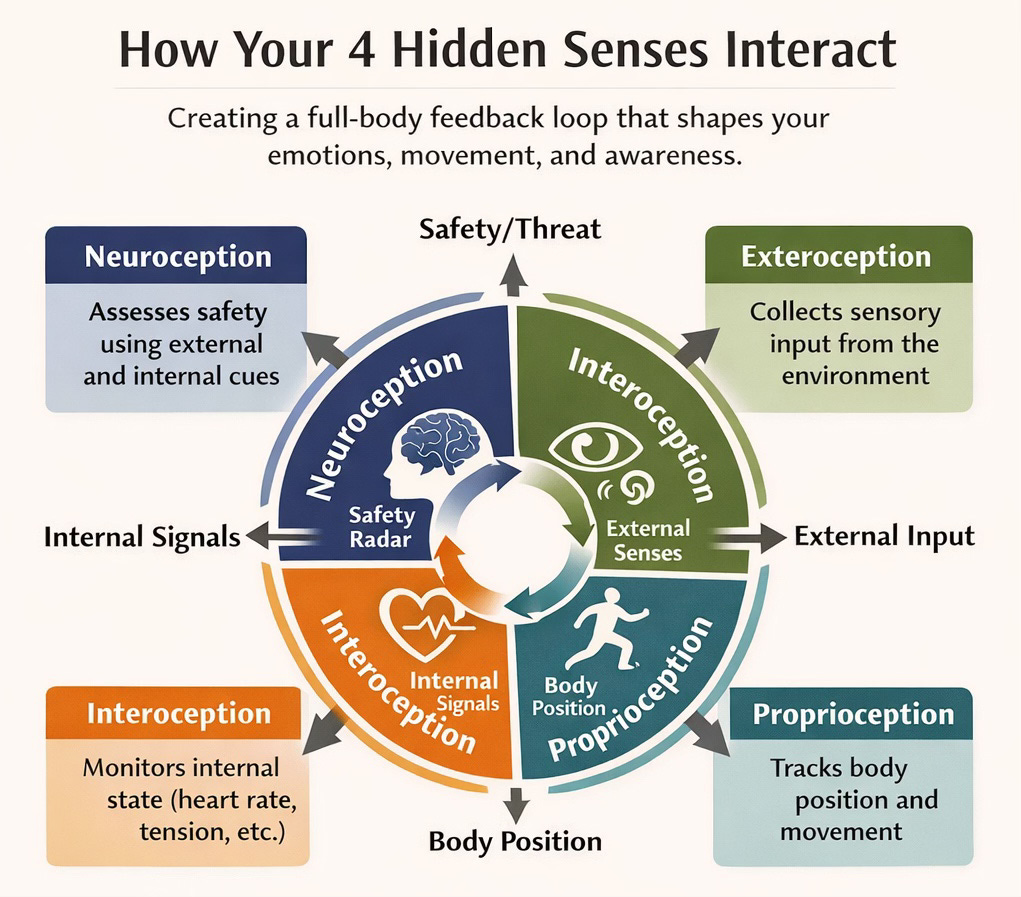
Each ception draws from many sensory sources. Each influences the others. Unlike passive senses (like smell or hearing), the ceptions are:
Integrative: They combine sensory data into patterns.
Interpretive: They shape emotional and behavioural meaning.
Trainable: You can sharpen them to improve focus, resilience, and presence.
They’re how you turn subconscious reactivity into conscious awareness.
The response reset
Next time you feel under pressure, use this practical tool.
Feel - Name - Respond
To help you see the benefit, track your tension or stress level by rating it from 1 to 10 before and after using the tool. This will help you measure the impact of this exercise on your state of mind.
1. Feel the signal
Notice what’s happening: your breath, your heartbeat, your posture, your thoughts. These are not distractions; they’re signals from your nervous system.
They’re telling you something. Start by tuning in, without judgment.
2. Name the system
Recognise which of your four ceptions is most active:
Is neuroception signifying a threat, real or perceived?
Is interoception telling you you’re overwhelmed or tense?
Is proprioception alerting you that your posture’s off, your body’s tight, or your movement feels awkward?
Is exteroception asking you to reconnect with your surroundings through the five senses?
3. Respond
Now choose a micro-action that will help you reconnect with yourself:
Take a conscious breath and soften the exhale.
Shift your posture.
Soften your gaze.
Tune into one sound or sensation around you.
These small shifts help calm you, reconnect you with your environment and bring you back to a more present state.
I invite you to try The Response Reset in moments of stress and see how it helps you stay more grounded and centred.
The more you do this, the more you will realise that you have a choice in how you respond to stressful situations.
In a world full of noise and stress, developing the skill of tuning into your ceptions is one of the most practical ways to help you manage your tension and anxiety.