

Getting Out of Your Own Way
On unlearning the habits your body forgot


Prefer to listen? Here’s the audio version by Jon:
RADA, Juilliard, and the Royal Academy of Music teach it.
Actors find presence with it, musicians control and dancers flow, but most people have never heard of it.
It’s called the Alexander Technique.
It’s the art of getting out of your own way by unlearning unhelpful habits of how you use your body.
I discovered it by chance, and I’ve found it to be one of the most powerful ways to get out of my head, live with more ease, and be fully present in my body.
Ideally you need a few lessons with a qualified teacher to fully ‘get it’ but I want to give you both an understanding of what it is and an experience of how it feels.
You might wonder why it isn’t more widely known.
It doesn’t shout loudly and doesn’t want to compete against the myriad of quick fix health promises, because that’s totally against its ethos. It won’t transform you in thirty days, and it’s no miracle cure.
But what I can promise is if you integrate it into your life you will experience a sense of calm presence, ease, and body awareness that is profound.
It was (re)discovered by accident
in the 1890s F.M. Alexander had a serious problem that was wrecking is acting career. Every time he went to perform he kept losing his voice on stage.
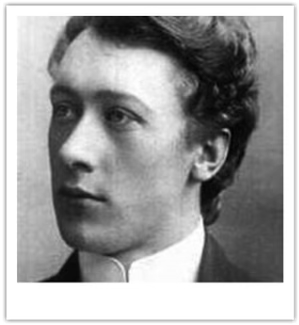
Doctors couldn’t find any reason for it so he embarked on an intense period of self observation. He spent hours watching himself in mirrors performing and speaking.
He found he unconsciously tensed his neck and pulled his head back every time he prepared to speak which was constricting his vocal cords.
From this discovery he taught himself to release his neck and balance his head to free his voice. He also realised he could help others benefit from his discovery, and so he moved to England and started teaching his technique.
Though challenged by deep scepticism from the medical profession he managed to attract famous people of the day like Aldous Huxley, John Dewey and George Bernard Shaw to the practice.
And from there awareness slowly grew especially with artists and performers who saw how it could enhance their abilities.
Where it goes wrong
The irony is in a perfect world the Alexander technique would not be necessary. Watch a cat move, or a young child run and play their movement flows in a natural co-ordinated way.
The problem is the habits we learn as we grow up.
The sad truth is children typically begin to lose their natural coordination around the time they start formal schooling; sitting at desks, being told to concentrate, learning to read and write.
And it goes down hill from there as adults more and more layers of tension and stress reduce ease of movement.
The head and neck relationship is key
Your head weighs the same as a 10-12lb bowling ball and how you use it affects every movement you make.
It sits on a pivot point at the very top of your spine. just behind your ears, and it’s designed to balance there with remarkable efficiency and minimal muscular effort as long as the neck is free.
But it all goes wrong when the startle reflex sabotages this dynamic.
When startled, every human does the same thing: the head retracts, the neck tightens, the breath stops.
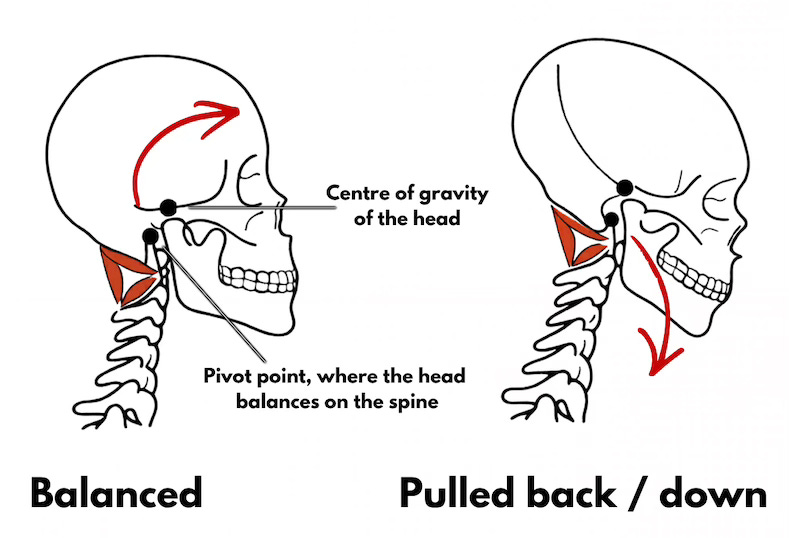
Repeated frequently over time it makes many live in a state of being perpetually slightly startled.
In practice, this means the majority of people pull their head back and down, compressing the neck, loading the spine, triggering a chain of tension that runs the length of the body.
The technique among other things is about thawing that frozen reflex.
Alexander called the head-neck-spine relationship the “primary control” : a master lever for the whole neuromuscular system. When it’s free, everything else in the body has a chance to organise itself.
When it’s not, no amount of targeted strengthening or stretching will work to fix the fundamental problem if your head and neck are constricted.
My experience
I came to the Alexander Technique out of desperation. A torn muscle had developed into sciatica that was giving me constant shooting pains down my left leg making it difficult to sit, to concentrate, to get through a day.
Painkillers weren’t cutting it. the daily commute into London was hell. I was in dispair.
By chance I was recommended to try the Alexander Technique by a friend. When I met Alan my teacher I had no idea what I was letting myself in for.
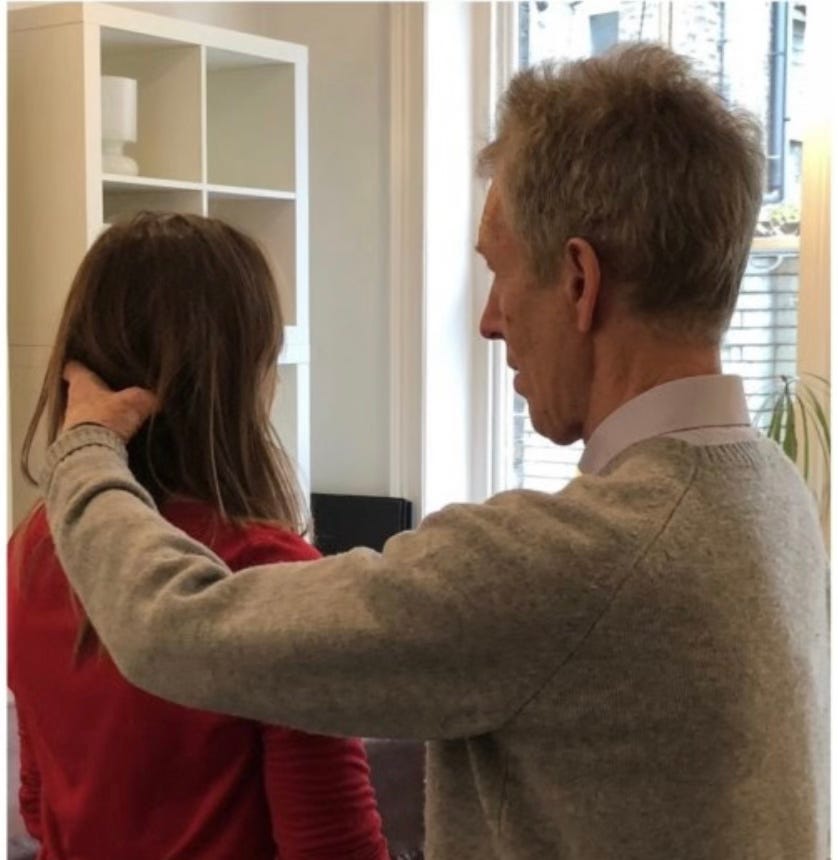
The first session was a revelation. I discovered how much I was living in my head, how hunched by shoulders were from using a computer all day and how I twisted my body to compensate for the back pain.
Alan gently guided my neck, head and back in unfamiliar ways and I felt a lot of release and freedom in my body.
The most wonderful experience was in the last part of the session when I lay down on my back on a table. Alan guided me into sublime relaxation releasing tension in all my joints. I felt expanded, freer and deeply peaceful like a still clear lake on a warm sunny day.
I still enjoy seeing Alan 25 years later, and we always joke about could he just leave me on the table and come back in a couple of hours at the end of a session.
Try it for yourself
In a lesson you learn to use ‘directions’, these are mental thoughts for directing the body to do things. You don’t actively do them physically, the thoughts are enough.
The idea is that conscious intention influences the nervous system in a way that effortful doing cannot.
There are many ‘directions’ but the primary ones are: “Let the neck be free so the head can go forward and up …allowing the back to lengthen and widen.”
The purpose is to encourage the head, neck and back to align and help the body to do its thing without interference from unhelpful habits like compressing the neck.
Here’s my favourite exercise to try.
Lying down in the Semi-supine position
This is great for giving your back a rest. The Semi-supine position allows the spine to decompress and your body to gain a sense of expansion and freedom using gravity.
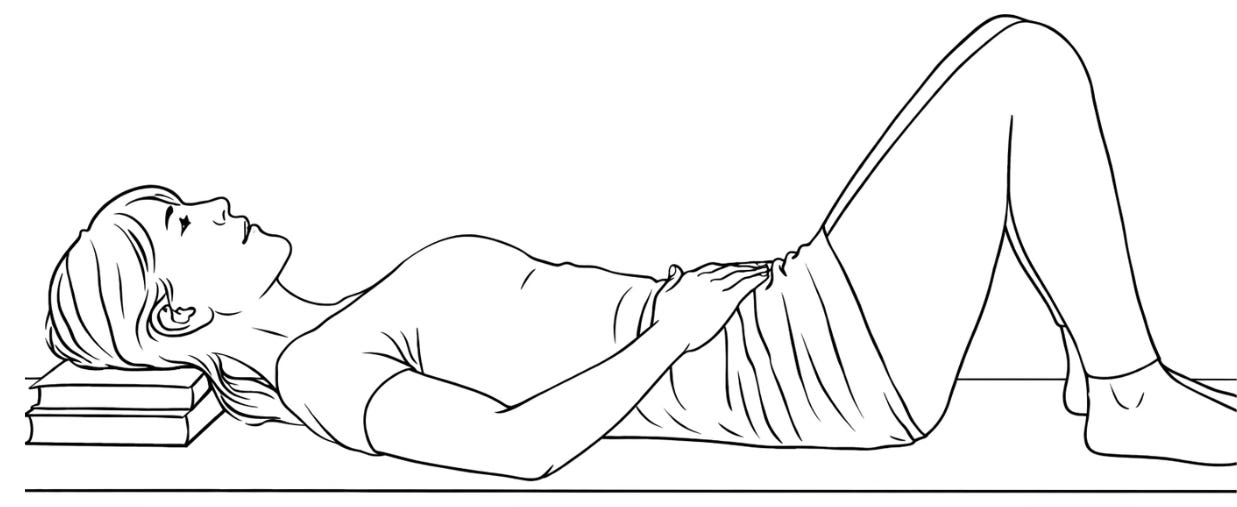
Here’s a simplified version you can try:
Find a few slim paperback books.
Lie on your back on a firm floor or yoga mat.
If you are wearing a belt take it off.
Place the books under your head and adjust the number so your head is supported and parallel to the floor,enough to stop your head going backwards, and not so many that your chin tucks to your chest.
Now bend your knees so your feet are flat on the floor with equal weight, hip width apart. Your knees should be pointing at the ceiling.
Place both your hands, palms open on your stomach with your elbows comfortably resting on the floor
Sense your back in contact with the floor, you will probably notice a lot of holding especially with the lower back, just let it go as much as you can.
Sense your neck relaxing and your shoulders widening away from each other. You can say the primary directions here if you find it helpful “Let the neck be free so the head can go forward and up allowing the back to lengthen and widen”
You are giving your spine space and permission to decompress.
Stay like this for 15 minutes if you can, keep your feet flat on the floor and let gravity do its work. If that feels too much start with 5 minutes and build from there.
When you have finished, roll over to one side and pause for a minute before sitting up.
If you do this regularly it will really help your body, especially your back let go of tension.
Some people have even reported growing an inch or more because they have decompressed their spine so much!
If you want to go deeper I’ve record a a fifteen-minute guided audio of a session where I go into a more advanced version of the lying down exercise. Give it a go, your back will thank you.
Download it here:
> Alexander Technique lying down audio(20MB)